Why Entrance Exams Aren’t the Gate Here
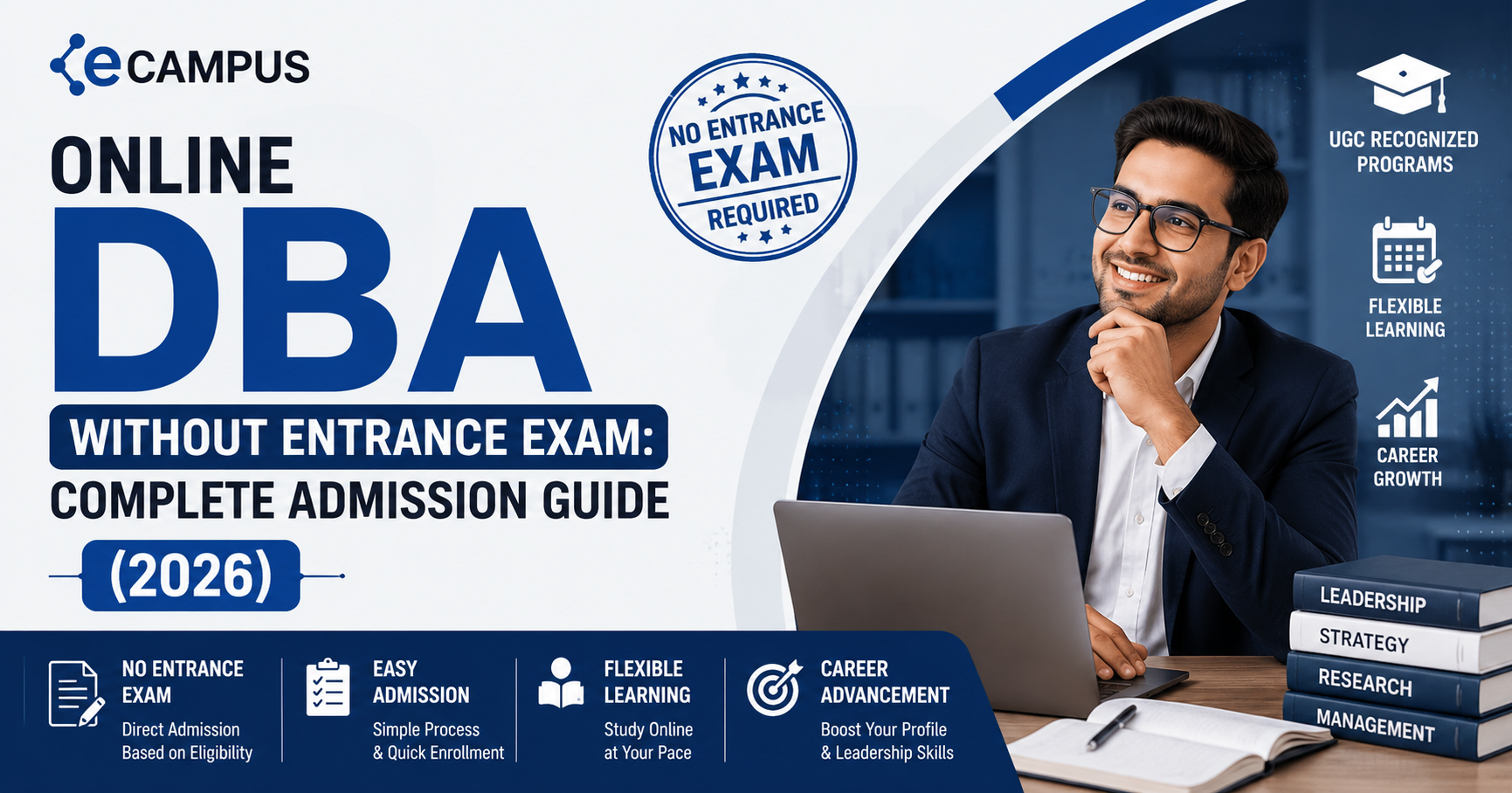
If you’ve researched a full-time doctoral programme, you’ve likely encountered GRE, GMAT scores, or English proficiency tests like TOEFL/IELTS as hard admission requirements. Most online DBA programmes for working professionals don’t use this model at all — and understanding why matters more than simply knowing the exam is absent, because it changes what you should actually prepare.
Full-time doctoral admission at research universities uses standardised testing partly to screen a large, often young, applicant pool with limited professional track record to evaluate instead. Online DBA programmes are built around a fundamentally different applicant profile: experienced professionals, often 8–20 years into their careers, where a standardised test score adds little predictive value compared to what their actual career trajectory already demonstrates. This is the structural reason the exam requirement disappears, not a lowering of the bar.
What Universities Evaluate Instead
Your professional experience and career trajectory. This is typically the single heaviest factor. Universities want to see progressive responsibility, decision-making authority, and — critically for a doctorate specifically — genuine access to organisational problems substantial enough to sustain three years of applied research.
Your prior academic qualification. A master’s degree from a recognised university generally satisfies this outright. Where you’re entering with only a bachelor’s degree, universities typically require a minimum number of years of relevant work experience to compensate — commonly in the 3–5 year range, though this varies meaningfully by institution [VERIFY exact current thresholds directly with each university, as this is the detail most likely to determine your actual eligibility].
A statement of purpose or research interest. Even without a formal entrance exam, most programmes ask you to articulate, in writing, what business problem you’re hoping to investigate. This isn’t a formality — reviewers use it to gauge whether you have a genuine, researchable question in mind or are applying without a clear direction, which matters considerably for a degree built around independent applied research.
Interviews, where used. Some programmes conduct a structured interview or profile review call as part of the process, rather than a written exam. This tends to function as a two-way conversation — confirming fit, answering your questions, and assessing communication clarity — rather than a pass/fail test.
The Admission Process, Step by Step
Step 1 — Initial application. Submit your academic transcripts, resume/CV, and basic personal details through the university’s official application channel.
Step 2 — Profile review. Faculty or an admissions committee reviews your academic background and professional experience against the programme’s stated criteria.
Step 3 — Statement of purpose / research interest. Submit a written statement outlining your intended area of applied research — this is where you demonstrate you have a genuine, specific problem in mind, not a vague interest in “getting a doctorate.”
Step 4 — Interview or advisory conversation (where applicable). A conversation with an admissions advisor or faculty member to confirm fit and answer outstanding questions.
Step 5 — Offer and enrolment. On successful review, you receive a formal offer, complete enrolment formalities, and begin the programme.
[VERIFY the exact current process at your specific target university, as sequencing and specific requirements vary.]
What “No Entrance Exam” Doesn’t Mean
It doesn’t mean no evaluation. Universities are still assessing your fit for doctoral-level applied research — they’re just doing it through your career record and written statement rather than a standardised score.
It doesn’t mean lower academic rigour once enrolled. The absence of an entrance exam reflects an admissions philosophy suited to experienced professionals, not a signal about the coursework or dissertation standard you’ll be held to during the programme itself.
It doesn’t automatically mean the programme is legitimate. This is worth stating plainly: the absence of an entrance exam is a normal, expected feature of this specific format — but it should never be the only thing you check. A programme with no entrance exam and no genuine accreditation, and no real faculty supervision structure, and vague dissertation requirements is a different, much more serious concern. Verify accreditation and dissertation structure independently, regardless of the entrance exam question.
How to Prepare Your Application Without an Exam to Study For
Write your statement of purpose with genuine specificity. Vague statements (“I want to become a strategic leader”) are weaker than specific ones (“I want to research how mid-sized Indian manufacturing firms manage supplier risk during currency volatility, drawing on my nine years in procurement at [type of organisation]”). Reviewers can tell the difference immediately.
Have your work experience documentation ready and precise. Offer letters, promotion letters, or a detailed CV with quantified responsibilities strengthen a profile-based evaluation considerably more than a generic job title alone would.
If English proficiency isn’t formally tested, be honest with yourself about your actual readiness. A doctoral programme, even without a TOEFL/IELTS requirement, involves substantial academic writing and live discussion in English. If this is genuinely a stretch for you, address it proactively — some programmes offer bridging support, and it’s worth asking directly rather than discovering the gap mid-programme.
FAQs
1. Do I really not need GMAT or GRE for an online DBA?
Correct, at most programmes designed for working professionals — admission is based on your professional experience, prior qualification, and a statement of research interest rather than standardised testing.
2. Does no entrance exam mean the programme is easier to complete?
No — the absence of an entrance exam relates specifically to the admission process, not the academic rigour of coursework or the dissertation standard you’re held to once enrolled.
3. What replaces the entrance exam in the evaluation process?
Your professional experience and career trajectory, your prior academic qualification, a written statement of research interest, and often a profile interview or advisory conversation.
4. Is a bachelor’s degree enough to apply without a master’s?
Often yes, provided you have sufficient relevant work experience — commonly 3–5 years, though this varies by university.
5. Should I be suspicious of a programme with no entrance exam?
Not on that basis alone — it’s standard for this format. Be suspicious if the absence of an entrance exam is paired with other red flags: no genuine accreditation, no real faculty supervision, or vague dissertation requirements.